Safety Planning in Industrial Construction: Building Safe Foundations
Industrial construction projects involve complex environments where heavy machinery, specialized equipment, and large workforces operate simultaneously. In such settings, safety planning is not optional – it is fundamental to successful project delivery.
A well-structured safety management system ensures that construction activities are carried out responsibly, risks are minimized, and workers operate in secure environments. Effective safety planning begins long before the first piece of equipment arrives on site and continues throughout the entire project lifecycle.
Why Safety Planning Matters
Industrial construction sites present unique challenges compared to residential or commercial construction. Activities such as equipment installation, structural work, confined space entry, and heavy material handling create potential hazards.
Without proper planning, these risks can lead to accidents, operational disruptions, and costly project delays. Implementing structured safety policies ensures that risks are anticipated, managed, and continuously monitored.
A strong safety framework also contributes to improved productivity. Workers perform more efficiently when they feel secure, processes become streamlined, and unexpected incidents are minimized.
Establishing a Safety Policy
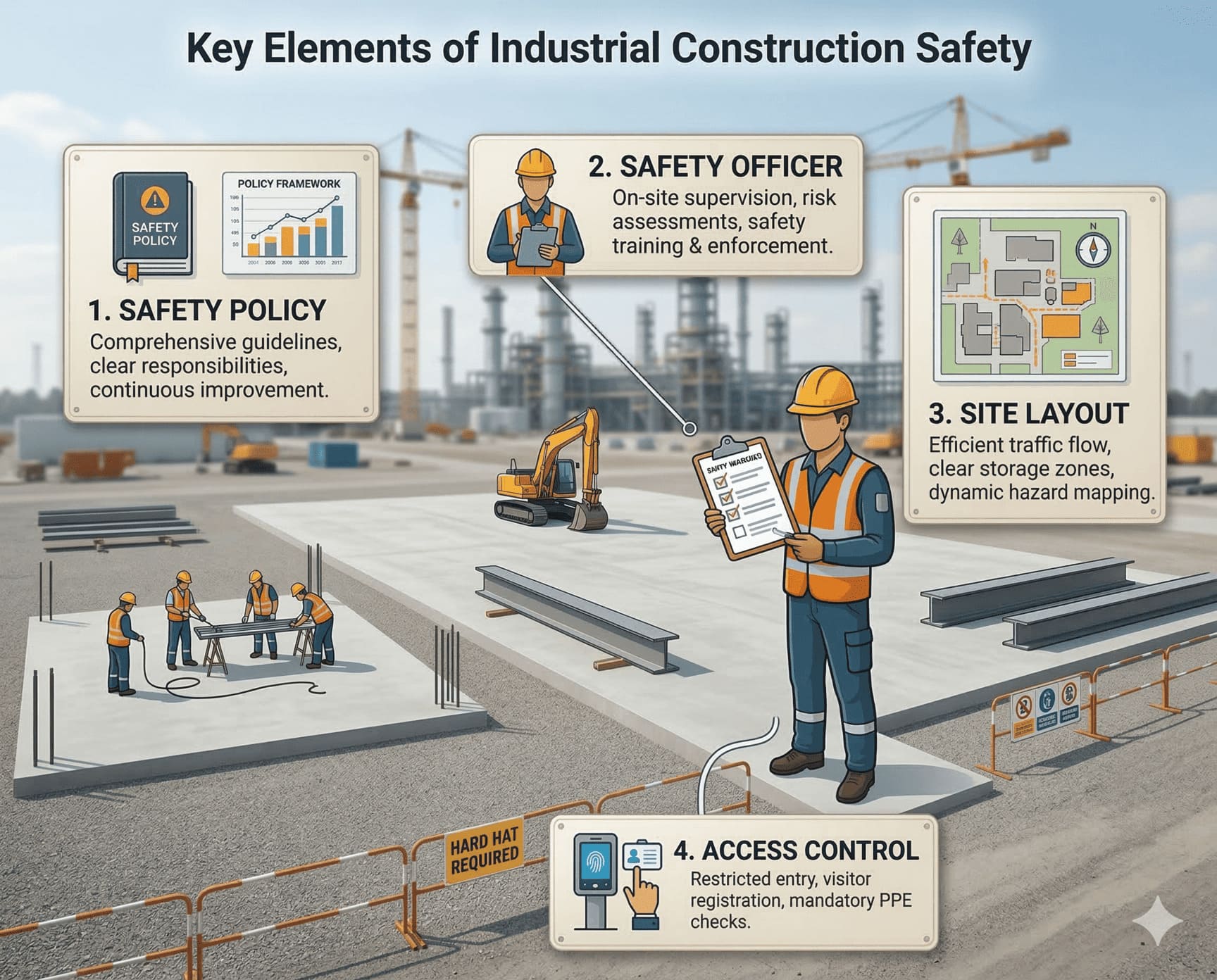
Every industrial construction project should begin with a formal health and safety policy approved by senior management. This policy defines the organization’s commitment to worker safety and outlines the procedures that govern site operations.
A comprehensive safety policy typically covers:
- Hazard identification and risk assessment
- Emergency preparedness and evacuation procedures
- Personal protective equipment (PPE) requirements
- Incident reporting protocols
- Worker training and safety awareness
These policies should be clearly communicated to all workers through site inductions, safety briefings, and visible signage across the construction site.
Role of the Safety Officer
One of the most important roles in site safety management is the appointed safety officer. This individual is responsible for ensuring that safety standards are consistently implemented throughout the project.
Key responsibilities include:
- Conducting regular site inspections
- Leading toolbox talks and safety briefings
- Investigating accidents and near-miss incidents
- Monitoring compliance with safety procedures
- Issuing and verifying work permits for high-risk activities
The safety officer must also have the authority to stop unsafe work immediately if conditions pose a risk to workers or the project.
Importance of Site Layout and Access Control
Safety is influenced not only by policies but also by how the construction site is organized. A well-planned site layout helps prevent accidents and improves operational efficiency.
Critical elements of safe site planning include:
- Clearly demarcated work zones and storage areas
- Separate pathways for workers and vehicles
- Emergency evacuation routes and assembly points
- Secure fencing around the project perimeter
- Controlled access points with visitor registration
Warning signs such as “Authorized Personnel Only” or “No Entry” help communicate potential hazards and prevent unauthorized access.
In large industrial projects, CCTV monitoring and security personnel may also be used to maintain oversight and improve site safety.
Avoiding Common Safety Pitfalls
Despite having documented safety policies, some projects fail due to poor implementation. Common mistakes include:
- Policies that are written but never explained to workers
- Safety officers lacking authority to enforce rules
- Emergency exits blocked by construction materials
- Visitors entering sites without proper safety induction
These gaps highlight the importance of consistent communication and active supervision.
Building a Culture of Safety
Safety planning should not be treated as a one-time checklist. Instead, it must be integrated into everyday operations.
Daily toolbox talks, regular safety training, and continuous supervision help reinforce safe work practices. When safety becomes part of the organizational culture, workers actively participate in identifying hazards and improving site conditions.
In industrial construction, a safe site is ultimately a productive site. By establishing strong safety policies, appointing responsible personnel, and maintaining disciplined site management, organizations can create environments where projects progress smoothly while protecting the wellbeing of everyone involved.