Safe Work Practices for Industrial Construction Sites
Safety policies and risk assessments provide the framework for safe construction projects, but daily work practices ultimately determine whether a site remains safe.
Adopting disciplined work practices helps prevent accidents and ensures operations run smoothly.
Working at Height
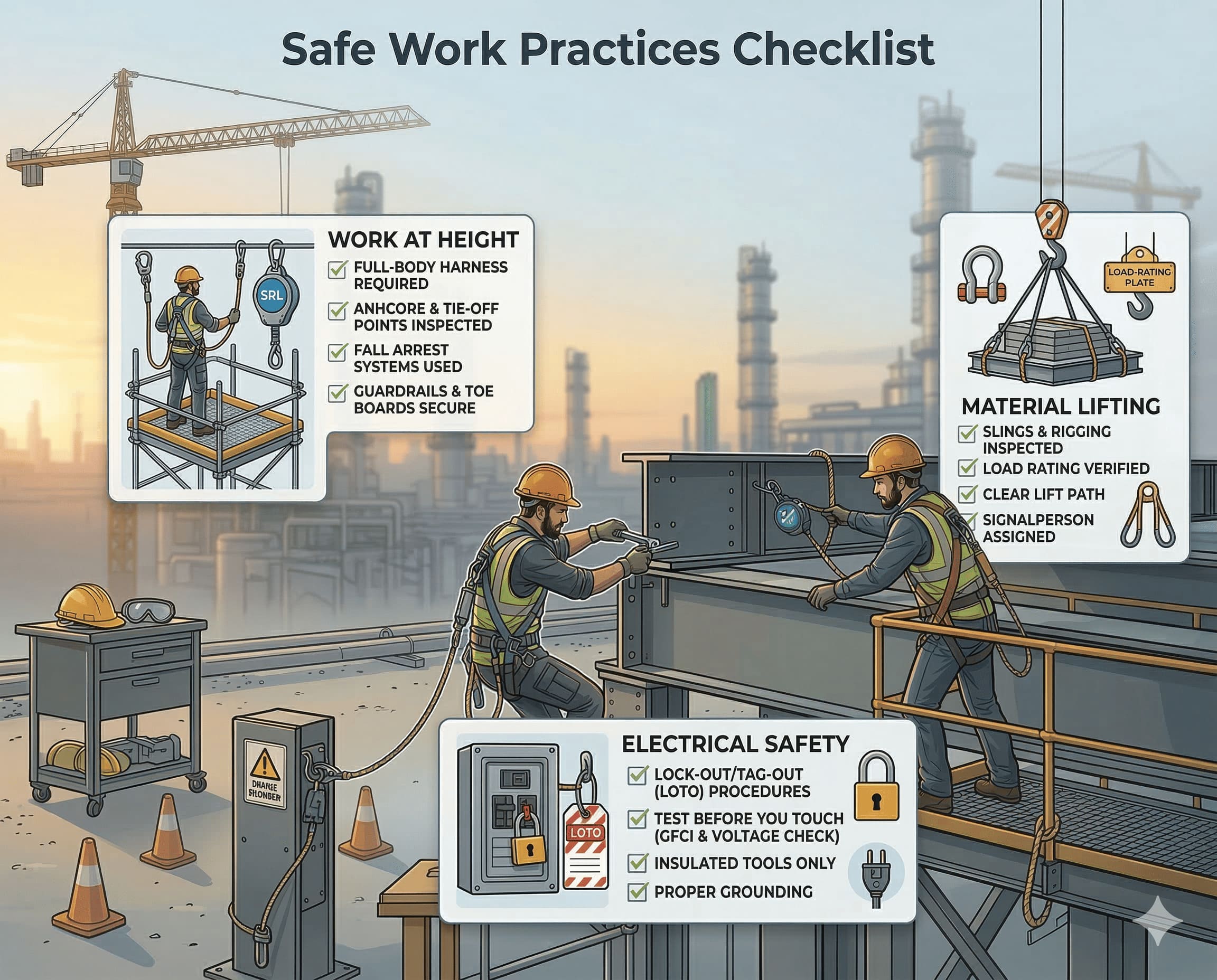
Working at height is one of the most hazardous construction activities. Proper scaffolding systems must be installed by trained personnel and inspected regularly.
Guardrails, toe boards, and fall arrest systems such as harnesses and lifelines help protect workers from falls.
Weather conditions also play a significant role. Activities at height should be stopped during high winds, heavy rain, or poor visibility.
Safe Material Handling
Material handling is another area where injuries commonly occur.
Workers should be trained in safe lifting techniques, including:
- Bending knees while lifting
- Keeping the back straight
- Avoiding twisting movements
For heavy loads, mechanical equipment such as cranes, forklifts, and hoists should be used.
Traffic management plans that separate vehicle and pedestrian movement further reduce risks.
Electrical Safety Practices
Electrical systems require strict safety measures to prevent shock hazards.
Key practices include:
- Proper grounding of electrical installations
- Use of insulated tools
- Lockout-tagout procedures before maintenance
- Safe routing of temporary wiring
Regular electrical testing and inspections ensure systems remain safe throughout the project.
Reinforcing Safe Practices
Daily toolbox talks help reinforce safety guidelines before workers begin their shifts. Visual signage, supervisor oversight, and regular inspections ensure safe practices are consistently followed.
When workers understand the importance of these practices, they are more likely to follow them voluntarily.