Emergency Preparedness and Accident Investigation in Construction Projects
Even with strong safety practices, emergencies can still occur. Effective emergency preparedness ensures construction sites can respond quickly to minimize injuries and damage.
First Aid and Emergency Response
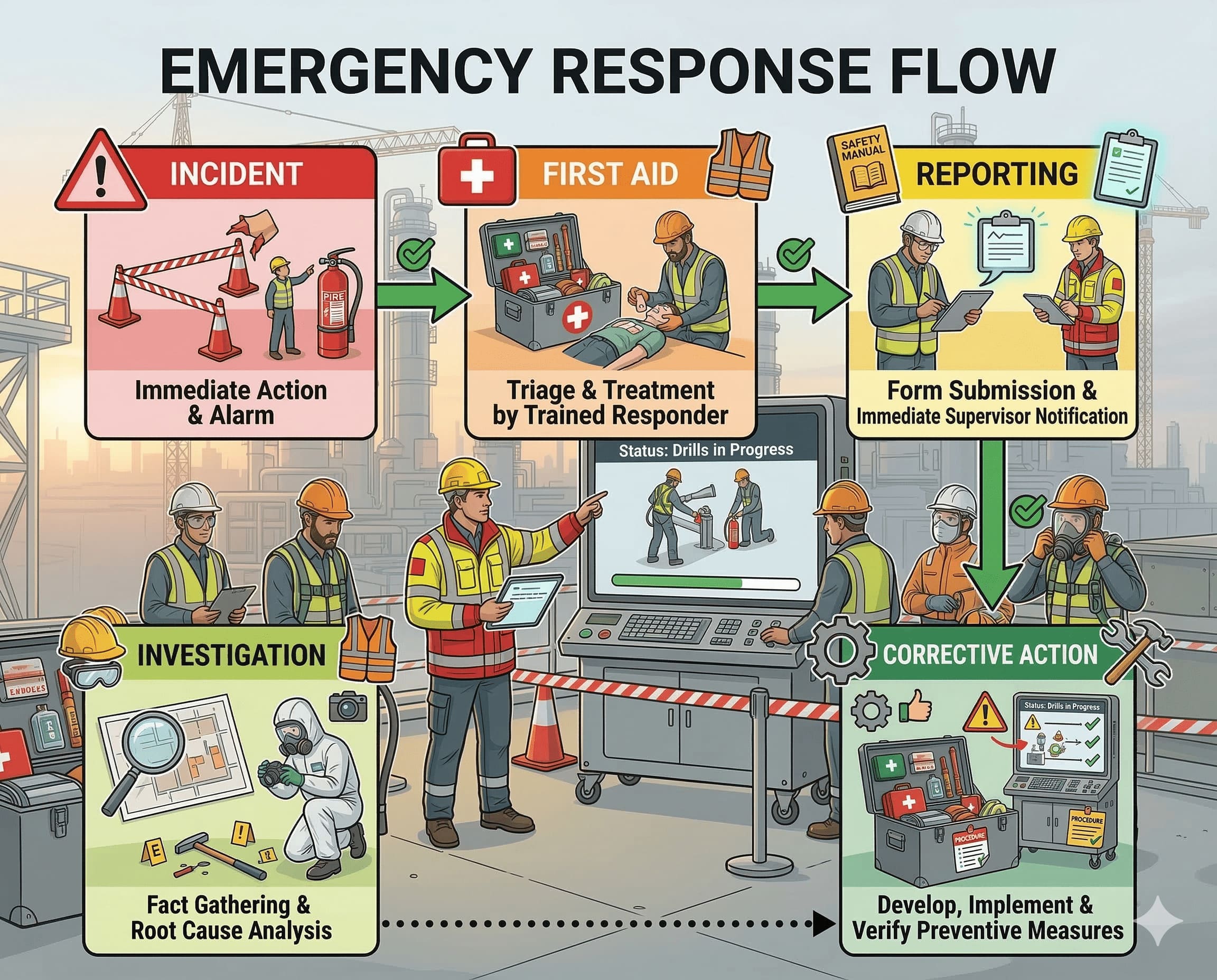
Construction sites must have first aid stations located at easily accessible points. These stations should contain medical supplies such as bandages, antiseptics, burn kits, and eye wash solutions.
At least one trained first aider should be available for every twenty workers on site.
Emergency contact numbers for hospitals, fire departments, and ambulance services should be clearly displayed.
Fire Safety and Evacuation Planning
Fire safety is critical in construction environments where welding, fuel storage, and electrical systems are present.
Fire extinguishers should be placed strategically near high-risk areas and workers should be trained in their correct use.
Evacuation routes and assembly points must be clearly marked with signage so workers know where to gather during emergencies.
Regular fire drills help ensure workers understand these procedures.
Incident Reporting and Investigation
When accidents or near-miss incidents occur, they must be reported immediately to supervisors or safety officers.
Investigations should focus on identifying root causes rather than assigning blame. Techniques such as the 5 Whys or fishbone diagrams help uncover underlying issues.
Corrective actions address the immediate problem, while preventive actions focus on improving procedures to avoid recurrence.
Learning from Incidents
Incident reporting systems help organizations track patterns and identify recurring risks. Sharing lessons learned across teams helps strengthen overall safety practices.
Encouraging a culture where workers feel comfortable reporting hazards or near-miss incidents improves transparency and prevention.