Personal Protective Equipment (PPE) in Industrial Construction: Protecting Workers on Site
In industrial construction environments, workers are constantly exposed to hazards such as falling objects, sharp materials, electrical systems, heavy machinery, and chemical substances. Personal Protective Equipment (PPE) serves as the last line of defense against these risks, helping protect workers from injuries that could otherwise be severe or fatal.
While engineering controls and safe work practices play a major role in preventing accidents, PPE remains an essential safety requirement across construction sites.
Mandatory PPE for Construction Sites
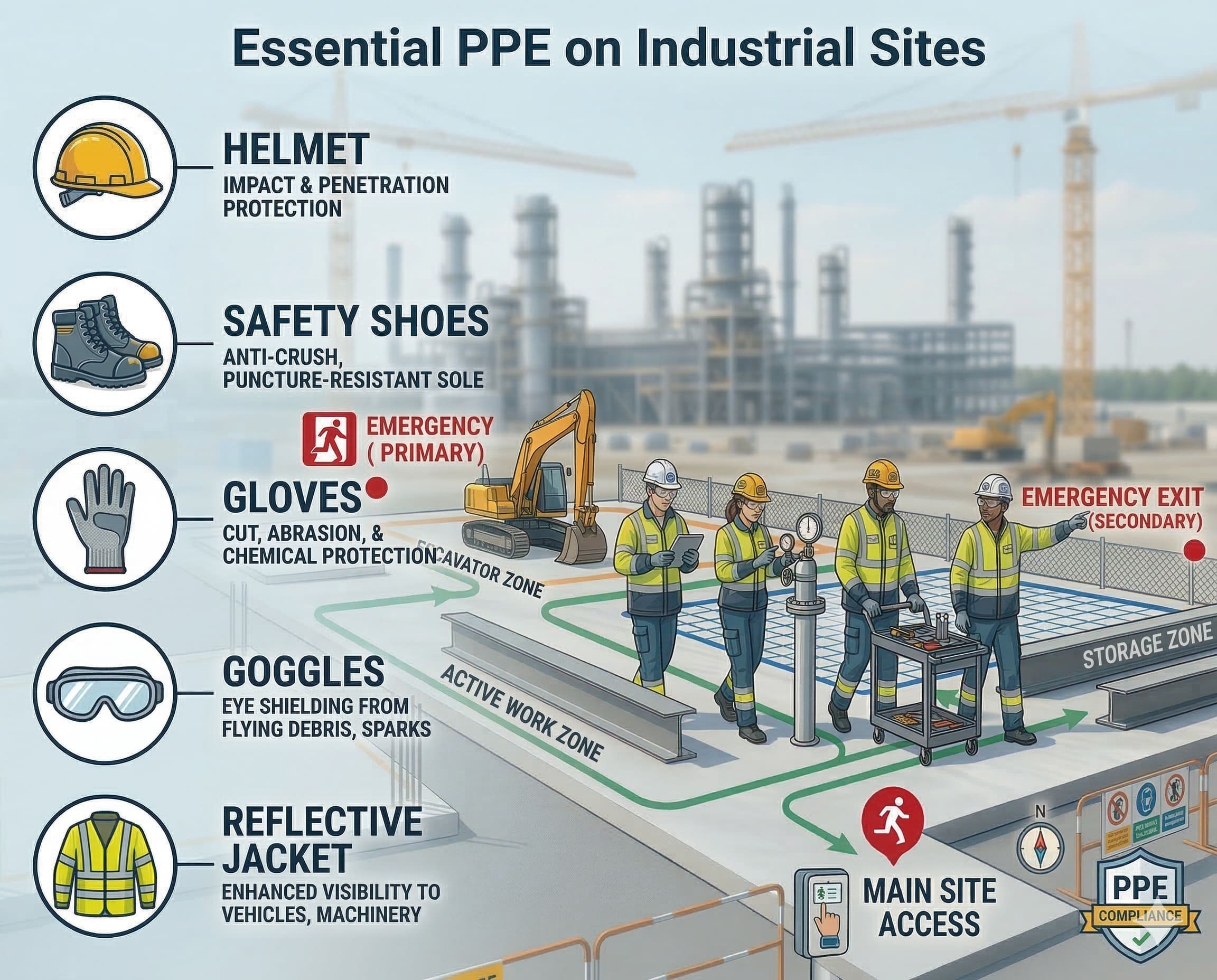
Certain protective equipment is mandatory for all personnel working on industrial construction sites.
Safety Helmets
Helmets protect workers from falling debris, accidental head impacts, and structural hazards. Construction helmets should comply with approved safety standards and must be worn correctly at all times.
Safety Shoes
Industrial construction sites involve heavy equipment, sharp materials, and uneven surfaces. Steel-toe safety shoes protect workers from foot injuries and punctures caused by debris.
Protective Gloves
Gloves protect workers from cuts, abrasions, chemicals, and extreme temperatures. Different tasks require different types of gloves, such as nitrile gloves for chemical handling or heavy-duty gloves for mechanical work.
Reflective Jackets
High-visibility clothing ensures workers can be easily seen by equipment operators and vehicle drivers. Reflective jackets are particularly important in large construction sites with active vehicle movement.
Eye Protection
Safety goggles or face shields protect workers from dust, sparks, chemical splashes, and flying debris during operations such as cutting, grinding, or welding.
Specialized PPE for High-Risk Activities
Some construction activities involve additional risks that require specialized protective equipment.
Welding Operations
Welders must use welding helmets, flame-resistant gloves, and protective aprons to protect against intense heat, sparks, and harmful radiation.
Chemical Handling
Workers handling chemicals should wear chemical-resistant gloves, protective clothing, and eye protection to prevent burns or contamination.
Working at Heights
Tasks performed at elevated locations require fall protection systems such as full-body harnesses, lanyards, and secure anchor points.
Electrical Work
Electricians working with live systems must use insulated gloves, dielectric boots, and arc-rated protective clothing to minimize electrical hazards.
Ensuring Proper PPE Compliance
Providing PPE is not enough—workers must also be trained to use it correctly. Proper training should include:
- Correct wearing and fitting procedures
- Maintenance and storage guidelines
- Inspection for damage or defects
- Replacement protocols when equipment becomes worn or damaged
Loose or improperly fitted PPE can actually increase risks, particularly when working near machinery or at heights.
Common PPE Mistakes
Some of the most frequent PPE violations occur during routine tasks when workers believe risks are minimal.
Examples include:
- Wearing helmets without chin straps while working at heights
- Using incorrect gloves for chemical handling
- Skipping protective eyewear during quick tasks
These small lapses can result in serious accidents.
Creating a PPE Culture
A strong safety culture ensures PPE is worn consistently and correctly. Supervisors should monitor compliance regularly, and safety officers should conduct inspections and training sessions.
Encouraging workers to understand why PPE matters rather than simply enforcing rules leads to greater compliance and improved safety outcomes.
When combined with proper safety planning and hazard control measures, PPE becomes a critical component in protecting workers and maintaining safe industrial construction sites.